The Science Behind Beautiful Wallpapers and Productivity
Discover how beautiful wallpapers and nature imagery can boost your productivity, reduce stress, and improve focus. Research-backed insights on environmental design.
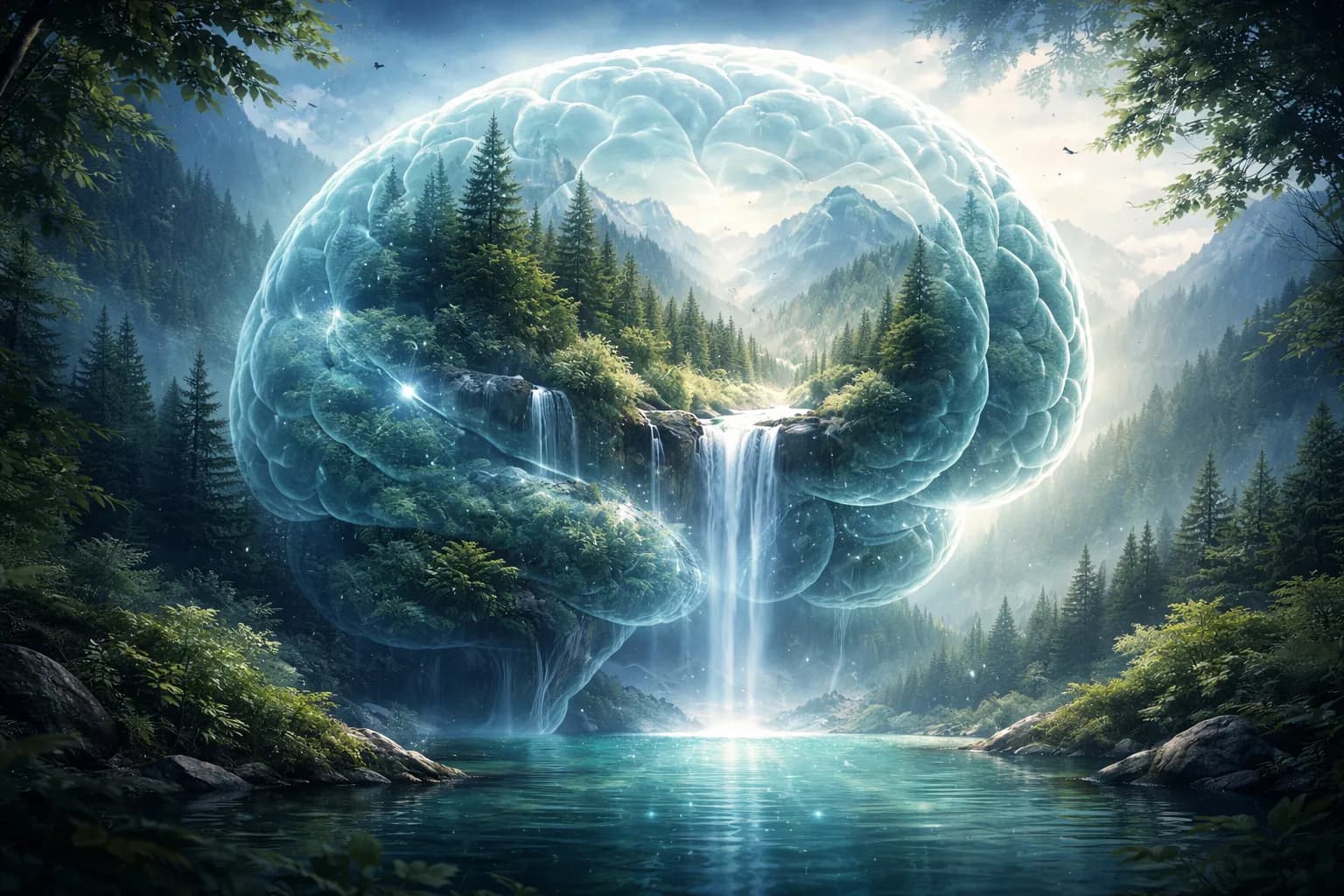
Every time you open a new browser tab, you're presented with a visual experience. Most people see Chrome's default gray page or a cluttered mess of shortcuts. But what if that moment could actually make you more productive?
Research suggests it can. Let's explore the science behind how beautiful wallpapers — especially nature imagery — can boost your productivity, reduce stress, and improve focus.
The Research: Nature and Cognitive Performance
Attention Restoration Theory
In the 1980s, environmental psychologists Rachel and Stephen Kaplan developed Attention Restoration Theory (ART), which explains why natural environments help us think better.
The theory distinguishes between two types of attention:
- Directed attention: Effortful focus required for tasks like coding, writing, or analyzing data. This resource depletes with use.
- Involuntary attention: Effortless engagement with inherently interesting stimuli, like a beautiful landscape.
Key finding: Exposure to nature engages involuntary attention, allowing directed attention to recover. Even images of nature can trigger this restorative effect.
The View Through a Window Study
A landmark 1984 study by Roger Ulrich found that hospital patients with views of trees:
- Recovered faster from surgery
- Required less pain medication
- Had fewer negative evaluations from nurses
compared to patients whose windows faced a brick wall.
Implication: Visual access to nature — even passive viewing — has measurable benefits for well-being and recovery.
Nature Images and Stress Reduction
A 2015 study published in the International Journal of Environmental Research and Public Health found that:
- Viewing nature images for just 40 seconds reduced stress and improved mood
- The effect was stronger for images of "green" environments (forests, fields)
- Even urban nature (parks, trees) provided benefits
The 6% Productivity Boost
Research from the University of Exeter found that employees working in offices with plants and natural elements were 15% more productive than those in lean, minimalist spaces.
While wallpapers aren't physical plants, the visual connection to nature provides similar psychological benefits.
How Wallpapers Affect Your Brain
The Role of Biophilia
Biophilia is the innate human tendency to seek connections with nature. This evolutionary trait explains why:
- We find natural landscapes inherently beautiful
- Nature sounds (rain, waves) are calming
- Green spaces reduce anxiety
When you see a beautiful nature wallpaper, your brain responds as if you were actually in that environment — triggering relaxation and focus.
Color Psychology
The colors in your wallpaper also matter:
| Color | Effect | Best For |
|---|---|---|
| Blue | Calming, trust, focus | Analytical work |
| Green | Balance, growth, rest | Creative work |
| Yellow | Energy, optimism | Brainstorming |
| Neutral | Stability, clarity | General productivity |
| Vibrant | Stimulation, energy | Short bursts of work |
Pro tip: Choose wallpapers with blues and greens for sustained focus, and more vibrant imagery for creative sessions.
The Goldilocks Zone of Complexity
Research on environmental preference shows that people prefer scenes with:
- Moderate complexity: Not too simple (boring), not too chaotic (overwhelming)
- Mystery: Elements that invite exploration (paths, horizons)
- Coherence: Organized, understandable scenes
This is why sweeping landscape photographs work so well — they're complex enough to be interesting but coherent enough to be calming.
Practical Applications
Choosing Productivity-Boosting Wallpapers
Based on the research, here's what to look for:
For Deep Focus Work:
- Nature scenes with blue/green dominance
- Calm water (lakes, oceans)
- Forests and mountains
- Minimal human elements
For Creative Work:
- More vibrant, energetic imagery
- Interesting architecture
- Abstract patterns
- Varied color palettes
For Stress Reduction:
- Beaches and sunsets
- Soft, diffused lighting
- Open landscapes
- Minimal visual clutter
Rotating Wallpapers for Sustained Effect
Interestingly, the restorative effect of nature images can diminish if you see the same image repeatedly. This is called habituation.
Solution: Use a wallpaper extension that rotates images automatically, like Dream Afar. Options include:
- New wallpaper every tab
- Hourly rotation
- Daily changes
This keeps the images fresh and maintains their psychological benefit.
Creating Visual Routines
Consider matching your wallpaper to your work mode:
Morning (focused work):
- Calm nature scenes
- Cool blue tones
- Mountains, forests
Afternoon (meetings, collaboration):
- More energetic imagery
- Warmer tones
- Urban scenes, architecture
Evening (winding down):
- Sunset imagery
- Warm, soft colors
- Beaches, calm water
The Dream Afar Approach
Dream Afar is designed with these principles in mind:
Curated Collections
Our wallpaper sources are carefully selected:
- Unsplash: Professional nature and landscape photography
- Google Earth View: Stunning aerial imagery of natural landscapes
- Custom uploads: Your own nature photos
Automatic Rotation
Dream Afar rotates wallpapers to prevent habituation and maintain the restorative effect. You can customize:
- Rotation frequency
- Preferred collections
- Favorite images to prioritize
Clean, Uncluttered Design
We keep the interface minimal so the wallpaper takes center stage. Less visual noise means more of the nature-viewing benefit.
Beyond Wallpapers: Creating a Productive Environment
While wallpapers help, consider these additional environmental optimizations:
Physical Workspace
- Add plants to your desk area
- Position near windows if possible
- Use natural lighting when available
Digital Environment
- Minimize visual clutter on your screen
- Use consistent, calm color schemes in your tools
- Take "visual breaks" to look at something distant
Behavioral Habits
- Step outside for 5-10 minutes between tasks
- Practice the 20-20-20 rule: Every 20 minutes, look at something 20 feet away for 20 seconds
- Schedule outdoor time for lunch or breaks
Conclusion
The next time someone dismisses beautiful wallpapers as "just decoration," you'll know better. The science is clear: what we see affects how we think, feel, and perform.
By choosing the right imagery for your new tab page, you're not just making your browser prettier — you're setting the stage for better focus, lower stress, and higher productivity.
And the best part? It takes almost no effort. Install a wallpaper extension, choose a nature collection, and let the science do the rest.
Ready to try it? Get Dream Afar with curated nature wallpapers →
References
- Kaplan, R., & Kaplan, S. (1989). The Experience of Nature: A Psychological Perspective
- Ulrich, R.S. (1984). View through a window may influence recovery from surgery. Science, 224(4647), 420-421
- Berman, M.G., Jonides, J., & Kaplan, S. (2008). The cognitive benefits of interacting with nature. Psychological Science, 19(12), 1207-1212
- Nieuwenhuis, M., et al. (2014). The relative benefits of green versus lean office space. Journal of Experimental Psychology: Applied, 20(3), 199-214
Try Dream Afar Today
Transform your new tab into a beautiful, productive dashboard with stunning wallpapers and customizable widgets.